Table of Contents
- What Is a Cheque Bounce?
- Governing Law: Banking Offence and Punishment Act 2064
- What to Do When a Cheque Bounces: Step-by-Step
- Criminal Case for Cheque Bounce
- Penalties for the Drawer
- Civil Recovery of Money
- Limitation Period for Cheque Bounce Cases
- Defence Available to the Drawer
- Cheque Bounce and Business in Nepal
- Conclusion
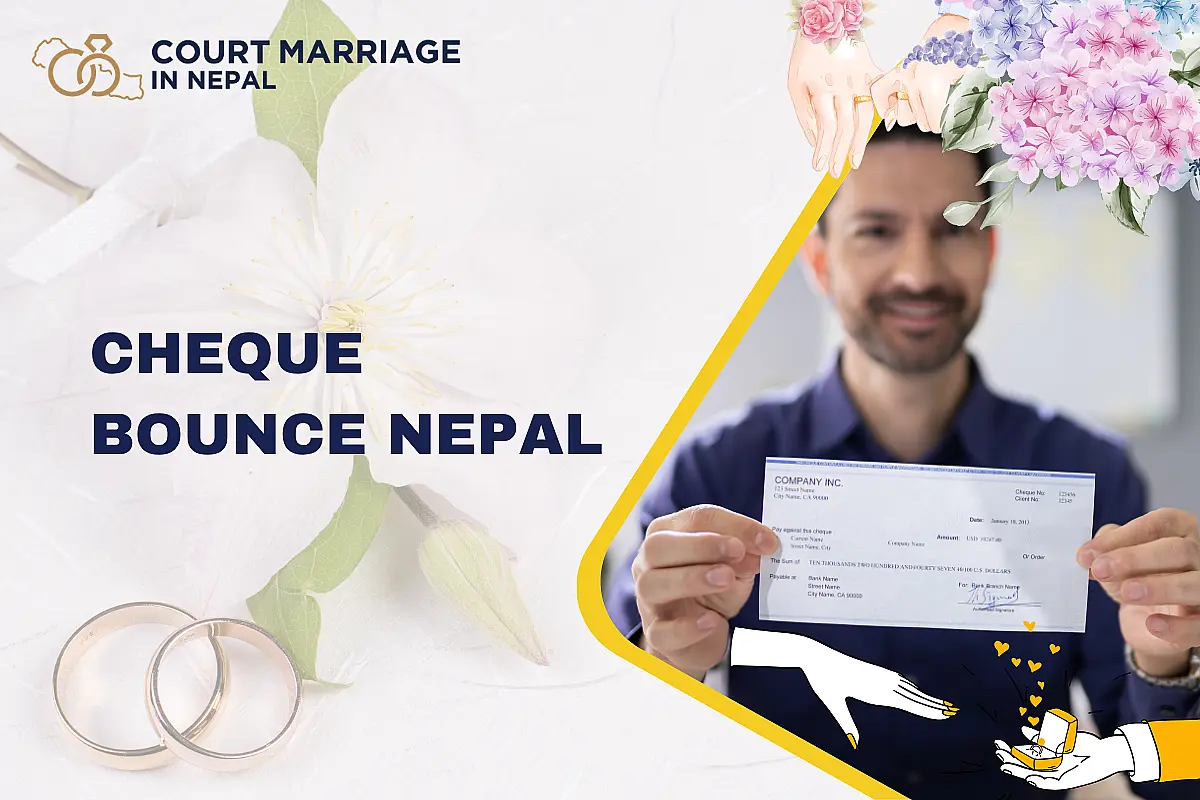
Receiving a bounced cheque can feel like a betrayal of trust, especially when significant money is at stake. In Nepal, a cheque bounce (also called a dishonoured cheque) is not just a financial inconvenience -- it is a criminal offence punishable under the Banking Offence and Punishment Act 2064 (2008). Every year, thousands of cheque bounce complaints are filed in Nepal's courts, making this one of the most common banking-related disputes in the country.
As of April 2026, Nepali law provides both criminal and civil remedies for the payee when a cheque is dishonoured. Whether you received a cheque for a business transaction, a loan repayment, or property payment, this guide explains your legal rights and the exact steps to recover your money.
Cheque bounce in Nepal is a criminal offence under the Banking Offence and Punishment Act 2064. If a cheque is returned unpaid due to insufficient funds or other reasons, the payee must send a legal notice to the drawer demanding payment. If the drawer fails to pay, the payee can file a criminal complaint in the District Court within one year from the cause of action. Penalties are graduated based on cheque amount -- ranging from up to one month imprisonment (under NPR 15 lakh) to up to four years (above NPR 10 crore) -- plus a fine of 5% of the suit amount.
Trusted by 2,000+ couples from 50+ countries since 2016.
Speak with a court marriage lawyer today →
What Is a Cheque Bounce?
A cheque bounce occurs when a bank refuses to honour a cheque presented for payment. The bank issues a return memo (also called a cheque return slip) stating the reason for dishonour. In legal terms under the Negotiable Instruments Act 2034 (1977), a cheque is a negotiable instrument that carries the drawer's unconditional promise to pay. When that promise is broken, the law provides remedies.
The most common reasons cheques bounce in Nepal include:
- Insufficient funds: The drawer's account does not have enough balance to cover the cheque amount
- Account closed: The drawer has closed the bank account
- Signature mismatch: The signature on the cheque does not match the bank's records
- Stale cheque: The cheque was presented more than six months after the date of issue
- Stop payment instruction: The drawer instructed the bank not to honour the cheque
- Overwriting or alteration: The cheque contains corrections or alterations without the drawer's counter-signature
- Exceeding overdraft limit: The cheque amount exceeds the approved overdraft facility
Not all reasons trigger criminal liability. Under the Banking Offence and Punishment Act 2064, only dishonour due to insufficient funds or the drawer's deliberate act (such as closing the account or issuing a stop payment) constitutes a criminal offence.
Governing Law: Banking Offence and Punishment Act 2064
The primary legislation governing cheque bounce in Nepal is the Banking Offence and Punishment Act 2064 (2008). This Act was enacted to address banking-related crimes, including cheque fraud and dishonoured cheques. Before this Act, cheque bounce cases were handled under general fraud provisions of the criminal code, which made prosecution difficult.
Key Provisions
Section 3 of the Act defines banking offences, which include issuing cheques without sufficient funds and deliberately causing cheques to bounce. Section 4 prescribes penalties including imprisonment and fines. The Act works alongside several other laws:
| Law | Role in Cheque Bounce Cases |
|---|---|
| Banking Offence and Punishment Act 2064 | Primary criminal law -- defines offence, penalties, and complaint procedure |
| Negotiable Instruments Act 2034 | Defines cheques as negotiable instruments, establishes validity rules |
| Muluki Criminal Code 2074 (2017) | General fraud and criminal procedure provisions apply where specific Act is silent |
| Banking and Financial Institutions Act 2073 | Regulates banks and financial institutions; governs account operations |
| Nepal Rastra Bank Directives | NRB regulations on cheque clearing, return procedures, and banking standards |
The Nepal Rastra Bank (NRB) has issued specific directives on cheque clearing timelines and return memo procedures that all banks and financial institutions in Nepal must follow. Under the current clearing system, cheques presented in Kathmandu Valley are typically cleared within one business day, while cheques from outside the valley take two to three business days.
What to Do When a Cheque Bounces: Step-by-Step
If you receive a bounced cheque, acting quickly is critical. The law imposes strict time limits, and missing them can weaken or even forfeit your claim. Here is the step-by-step process based on the Banking Offence and Punishment Act 2064.
Step 1: Collect the Return Memo from the Bank
When your bank returns the dishonoured cheque, it issues a return memo stating the reason for dishonour. This memo is your primary evidence. Keep the original cheque and the return memo safely -- you will need both to file a case. The return memo must clearly state the reason for dishonour (insufficient funds, account closed, etc.).
Step 2: Send a Legal Notice to the Drawer
Within 35 days of receiving the return memo, you must send a written legal notice to the cheque drawer demanding payment. The notice should include:
- Details of the cheque (number, date, amount, bank name)
- The date of dishonour and reason stated in the return memo
- A demand for full payment within 15 days
- A warning that criminal proceedings will be initiated if payment is not made
Send the notice through a registered postal service or through a lawyer to create a verifiable record. From our experience handling cheque bounce cases, many disputes are resolved at this stage when the drawer realizes the payee is serious about legal action.
Step 3: Wait 15 Days for Payment
After the drawer receives the legal notice, they have 15 days to make the payment. If the drawer pays the full cheque amount within this period, the matter is resolved and no criminal case can be filed.
Step 4: File a Criminal Complaint
If the drawer fails to pay within the 15-day notice period, you can file a criminal complaint. The complaint must be filed in the District Court having jurisdiction over the area where the cheque was presented for payment or where the drawer resides. You will need to submit:
- The original bounced cheque
- The bank's return memo
- Copy of the legal notice sent to the drawer with proof of delivery
- Any underlying agreement or transaction proof (loan agreement, sale deed, etc.)
- Your identity documents
You can also simultaneously file for civil recovery of the amount. If you are unsure about the filing process, consulting a lawyer experienced in litigation in Nepal is advisable.
Facing a cheque bounce situation? Contact our legal team for guidance on filing a complaint and recovering your money.
Criminal Case for Cheque Bounce
Under the Banking Offence and Punishment Act 2064, cheque bounce is a cognizable and non-bailable offence when the amount exceeds certain thresholds. The criminal case process works as follows:
Filing and Investigation
The complaint is filed directly in the District Court. The court may order an investigation through the Nepal Police if needed. In many cases, the court proceeds based on documentary evidence -- the cheque, return memo, and legal notice -- without requiring a police investigation. You may also file an FIR at the police station to initiate a parallel investigation.
Court Proceedings
Once the court accepts the complaint, it issues a summons to the drawer (accused). The accused must appear before the court. If the accused fails to appear, the court can issue an arrest warrant. The trial follows the standard criminal procedure with evidence presentation, witness examination, and arguments from both sides.
Bail Provisions
The accused can apply for bail during the trial. The court considers the cheque amount, the accused's criminal history, and flight risk when deciding on bail. For large cheque amounts, courts may impose conditions such as depositing a portion of the amount as bail security.
Penalties for the Drawer
If found guilty under the Banking Offence and Punishment Act 2064, the drawer faces significant penalties. The severity depends on the cheque amount and the circumstances of the offence.
| Cheque Amount (NPR) | Maximum Imprisonment | Fine |
|---|---|---|
| Up to 15 lakh | Up to 1 month | 5% of the suit amount |
| 15 lakh to 50 lakh | 1 to 3 months | 5% of the suit amount |
| 50 lakh to 1 crore | 3 months to 1 year | 5% of the suit amount |
| 1 crore to 10 crore | 1 to 2 years | 5% of the suit amount |
| Above 10 crore | 2 to 4 years | 5% of the suit amount |
In addition to imprisonment and the 5% fine, the court can order the drawer to pay the full cheque amount plus interest as compensation to the payee. Both imprisonment and fine may be imposed simultaneously.
The graduated penalty structure means that cheque bounce involving larger amounts carries significantly heavier punishment. Courts in Nepal also commonly order the accused to pay the full cheque amount plus interest as compensation to the complainant, in addition to any criminal penalty.
Civil Recovery of Money
Apart from the criminal case, the payee has the right to file a civil suit for debt recovery. This is particularly useful when the criminal case is pending or when the payee wants to secure the amount through court-ordered attachment of the drawer's property.
A civil case for debt recovery can be filed in the District Court under the Muluki Civil Code 2074. The payee can claim:
- The full cheque amount
- Interest from the date the cheque was dishonoured
- Legal costs and lawyer fees
- Damages for financial loss caused by the dishonour
Filing both criminal and civil cases simultaneously is legally permissible and is a common strategy in Nepal. The criminal case creates pressure for settlement, while the civil case provides a direct mechanism for monetary recovery.
Limitation Period for Cheque Bounce Cases
Time limits are critical in cheque bounce cases. Missing these deadlines can bar your claim entirely.
| Action | Time Limit |
|---|---|
| Present cheque to bank | Within 6 months from date on cheque |
| Send legal notice after dishonour | Within 35 days of receiving return memo |
| Wait period after notice | 15 days from drawer receiving notice |
| File criminal complaint | Within 1 year from the cause of action under Banking Offence Act 2064 |
| Civil suit for recovery | Within 5 years from the date of dishonour under the Negotiable Instruments Act 2034 |
These limitation periods are strictly enforced by Nepali courts. From our experience, many payees lose their right to file a criminal case simply because they delay sending the legal notice or miss the filing deadline. Act promptly as soon as you receive the return memo.
Defence Available to the Drawer
The drawer (accused) is not without legal defences. Nepali courts have recognized several valid defences in cheque bounce cases:
- Cheque was obtained by fraud or coercion: If the drawer can prove the cheque was issued under duress or was stolen
- Underlying transaction was illegal: Cheques issued for illegal purposes (such as gambling debts) are not enforceable
- Payment was already made: If the drawer can show that the debt was settled by other means before the cheque was presented
- Notice not received: If the drawer genuinely did not receive the legal notice and can prove it
- Technical defects: If the cheque was presented after six months (stale cheque), or the payee failed to follow the proper notice procedure
However, the mere claim of "insufficient funds" or "I forgot" is not a valid defence. The law treats issuing a cheque without maintaining sufficient funds as a deliberate act.
Cheque Bounce and Business in Nepal
Cheque payments remain widely used in Nepal's business environment, especially for real estate transactions, wholesale trade, and loan repayments. The Nepal Rastra Bank has been working to modernize the payment system, but cheques continue to be a primary instrument for large transactions.
Business owners should take preventive measures to avoid cheque bounce situations:
- Always verify the drawer's bank balance if possible before accepting large cheques
- For significant transactions, request certified or bank-guaranteed cheques
- Include cheque bounce penalty clauses in your loan agreements and contracts
- Maintain proper records of all cheque transactions
- Present cheques for payment promptly rather than holding them for months
Married couples engaged in joint business ventures should be aware that cheque bounce liability falls on the individual whose name appears on the cheque as the drawer. In cases involving court marriage in Nepal, understanding joint financial obligations is essential for protecting both spouses' interests.
Conclusion
Cheque bounce is a serious criminal offence in Nepal with well-defined legal remedies. The Banking Offence and Punishment Act 2064 gives payees strong protections, including criminal prosecution and civil recovery options. The key to a successful claim is acting within the strict time limits -- send your legal notice promptly and file your criminal complaint within one year from the cause of action.
Whether you are a payee seeking to recover money from a dishonoured cheque or a drawer facing a complaint, professional legal guidance can make a significant difference in the outcome. Contact our experienced legal team today for a consultation on your cheque bounce case.
Last reviewed: April 2026.
Frequently Asked Questions
Yes. Under the Banking Offence and Punishment Act 2064, issuing a cheque that bounces due to insufficient funds or deliberate acts is a criminal offence. Penalties are graduated based on the cheque amount -- ranging from up to one month imprisonment for amounts under NPR 15 lakh to up to four years for amounts above NPR 10 crore, plus a 5% fine of the suit amount.
You must send a legal notice to the drawer promptly after receiving the bank's return memo demanding payment. If the drawer fails to pay, you can file a criminal complaint in the District Court within one year from the cause of action under the Banking Offence Act 2064. For civil recovery, the limitation is five years under the Negotiable Instruments Act 2034. Missing these deadlines can bar your claim.
Penalties under the Banking Offence and Punishment Act 2064 are graduated based on the cheque amount: up to 1 month (under NPR 15 lakh), 1-3 months (15-50 lakh), 3 months to 1 year (50 lakh to 1 crore), 1-2 years (1-10 crore), and 2-4 years (above 10 crore). A fine of 5% of the suit amount is also imposed. The court can additionally order the drawer to pay the full cheque amount plus interest as compensation.
Yes. Nepal law allows you to file a criminal complaint under the Banking Offence and Punishment Act 2064 and a separate civil suit for debt recovery under the Muluki Civil Code 2074 simultaneously. This dual approach is common and legally permissible.
You need the original bounced cheque, the bank's return memo, a copy of the legal notice with proof of delivery, the underlying transaction documents such as a loan agreement, and your identity documents. Keep originals safe for court proceedings.
You can file a civil suit and request the court to attach the drawer's property, bank accounts, or other assets. Criminal prosecution continues regardless of the drawer's financial situation. The court can also order installment payments if the drawer demonstrates inability to pay the full amount at once.
Yes. A post-dated cheque becomes valid for payment on the date written on it. If it bounces when presented on or after that date, all legal remedies under the Banking Offence and Punishment Act 2064 apply. The six-month presentation window starts from the date on the cheque.
Yes. There is no minimum cheque amount required to file a criminal complaint under the Banking Offence and Punishment Act 2064. However, for very small amounts, the legal costs may exceed the cheque value. Consider sending a legal notice first, as many disputes settle at that stage.
A cheque bounce case typically takes six months to two years in the District Court, depending on complexity and court workload. Cases with clear documentary evidence tend to be resolved faster. Appeals to the High Court or Supreme Court can extend the timeline further.
A return memo is an official document issued by the bank when it refuses to honour a cheque. It states the reason for dishonour such as insufficient funds or account closed. This memo is essential evidence for filing a cheque bounce complaint and must be preserved carefully.
Yes. Banks report dishonoured cheques to the Credit Information Bureau of Nepal. A cheque bounce record can negatively affect the drawer's credit rating, making it difficult to obtain future loans, credit cards, or banking facilities from any financial institution in Nepal.
Yes. The drawer can settle the cheque amount at any stage of the proceedings. If the payee receives full payment and agrees, they can request the court to withdraw the complaint. Courts generally encourage settlement in cheque bounce cases to reduce case backlog.
If the notice is sent to the drawer's correct address by registered post but is returned unclaimed, courts in Nepal generally consider this as deemed service. However, ensure you can prove the notice was sent to the correct address to strengthen your case.
The District Court having jurisdiction over the place where the cheque was presented for payment or where the drawer resides handles cheque bounce cases. The complaint is filed directly in the District Court under the Banking Offence and Punishment Act 2064.
Yes. If a cheque is issued on behalf of a company, both the company and the authorized signatory who signed the cheque can be held liable. The person who signed the cheque bears personal criminal responsibility, while the company faces civil liability for the cheque amount.
Court Marriage in Nepal Pvt. Ltd. is Nepal's first registered law firm for court marriage services. Since 2016, our Nepal Bar Council-registered advocates have helped 2,000+ couples from 50+ countries with marriage registration, document preparation, and legal consultation. Whether you are a Nepali citizen or a foreign national, contact us today for confidential legal assistance.